
AuditTrak centralizes your GMP lifecycle documentation — URS, FS/DS, risk assessments, test scripts, and executed results — in one validation-ready workspace.
Generate real-time traceability from requirement to test run, keep your validation pack always audit-ready, and cut the effort to manage changes, re-tests, and impact assessments.
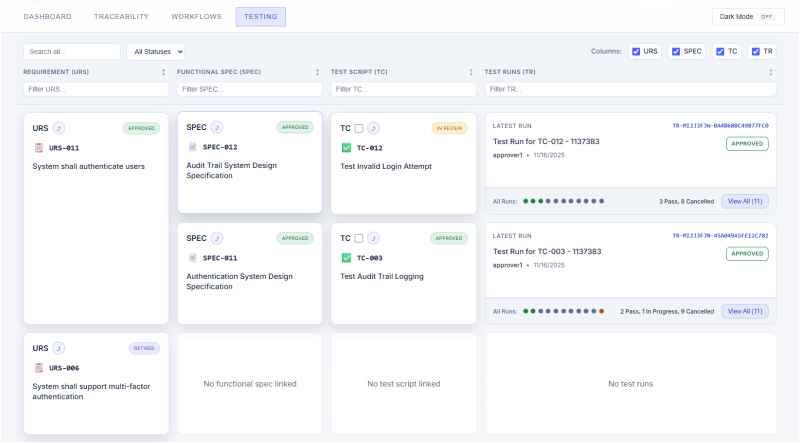
AuditTrak is a lightweight validation workspace that brings together requirements, design, risk, and testing so you don't have to chase Word docs, Excel matrices, and SharePoint folders across your SDLC.
Capture URS and FS/DS, link them to risk items, align test scripts, and attach executed evidence — all with a live traceability matrix that updates itself as you work.
When it's time for an audit or release, generate a clean validation pack with the exact structure your SOPs expect, including electronic sign-off history and execution logs.
AuditTrak doesn't try to be an LIMS or QMS. It focuses on the work validation and quality teams do every day: requirements, tests, and evidence.
Import existing URS / FS spreadsheets and test lists, then auto-create links and coverage views so you can see which requirements are untested, partially tested, or impacted by change.
Generate a validation summary, trace matrix, test inventory, and execution logs formatted to your templates, so you can drop the output straight into your QMS or document management system.
Link URS, FS/DS, risk items, tests, and evidence together instead of maintaining three different spreadsheets and a folder jungle.
When a requirement changes, AuditTrak highlights impacted tests and evidence so you can plan re-testing without guesswork.
Every executed test has who/when/what, including attachments, comments, and electronic signature history ready for inspectors.
Use AuditTrak alongside Jira, Azure DevOps, or your existing QMS — not as a replacement for everything you already have working.
“We used to track URS, risks, and tests in three different tools. AuditTrak gave us one live trace matrix and cut the time to prepare for audits dramatically.”